Last Updated: July 22, 2026
Why You Wake at Night And What Can Help
Article Summary:
Waking up at 3 AM is common and usually normal. Sleep becomes lighter during the second half of the night as your body shifts toward morning, making brief awakenings easier to notice. Stress, alcohol, room temperature, hormonal changes, needing the bathroom, or sleep apnea can make it harder to fall back asleep. A consistent wake time, a calming bedtime routine, a cool and dark bedroom, and avoiding clock-watching may help. See a doctor if it continues for several weeks or includes loud snoring, gasping, or choking.
You didn’t set an alarm, but you’re awake anyway, and it keeps happening around 3 AM. You blink at the ceiling, check the clock, and then spend the next hour doing the math on how little sleep you’re going to get. If this happens most nights, it’s worth knowing that middle-of-the-night waking is one of the most common sleep complaints there is, and in many cases it has a specific, addressable cause.
Here’s what tends to happen between 2 and 4 AM, why that window is so common, and the practical steps that can help you stay asleep, or fall back asleep more easily when you do wake.
Is Waking Up At 3 AM Normal?
Often, yes. Brief awakenings between sleep cycles are common and often go unnoticed. That’s normal sleep architecture, not insomnia. What tends to be different for chronic 3 AM wakers is that instead of drifting back under within a minute or two, they come more fully awake and then struggle to switch off again.
The timing isn’t random. Deep, restorative sleep is concentrated in the first half of the night, while the later hours hold lighter, more dream-heavy REM sleep that’s easier to wake from. Your circadian system also begins shifting the body toward morning alertness during the later part of the night. So the second half of the night tends to combine your lightest sleep with a slow shift toward wakefulness, which is part of why a brief awakening around 3 AM is so common.
The more useful question usually isn’t “why 3 AM?” but “what’s turning a normal, brief waking into a longer one?” That’s often one of the factors below.
The Most Common Reasons You Wake At 3 AM
Middle-of-the-night waking may be connected to one or more of these factors. The table gives a tell-tale sign for each so you can start narrowing down which might be yours.
Common 3 AM wake-up triggers and how to spot yours
| Possible factor | Tell-tale sign | First thing to try |
|---|---|---|
| Stress & a racing mind | You wake up already thinking: worries or to-do lists arrive right away | A wind-down routine and a “worry dump” notepad by the bed |
| Alcohol before bed | You fall asleep easily but wake a few hours later | Stop drinking at least 3–4 hours before bed |
| Needing the bathroom (nocturia) | A full bladder is what actually wakes you | Cut fluids 1–2 hours before bed; mention frequent trips to your doctor |
| Room too warm or too bright | You wake up hot, sweaty, or with early light in the room | Keep the bedroom comfortably cool, dark, and well ventilated |
| Hormonal changes (perimenopause/menopause) | Night sweats or hot flashes accompany the waking | Cooling bedding + talk to your provider about options |
| Sleep apnea | You wake gasping or choking; a partner reports loud snoring or pauses in breathing | Ask your doctor about a sleep study; don’t wait on this one |
Stress and a racing mind
Stress can increase mental and physical arousal, which makes a normal nighttime awakening more noticeable and harder to recover from. If you tend to wake up already thinking (worries and to-do lists arriving the moment your eyes open), daytime stress is a likely contributor. The tell is that you wake up already tense, rather than calm and then gradually worried.
Alcohol before bed
A nightcap can make you drowsy up front, but as your body metabolizes the alcohol over the next few hours, sleep in the back half of the night tends to become lighter and more broken, often right around 3 AM. If your worst nights follow evening drinks, alcohol is worth ruling out first.
Temperature, light, and your sleep environment
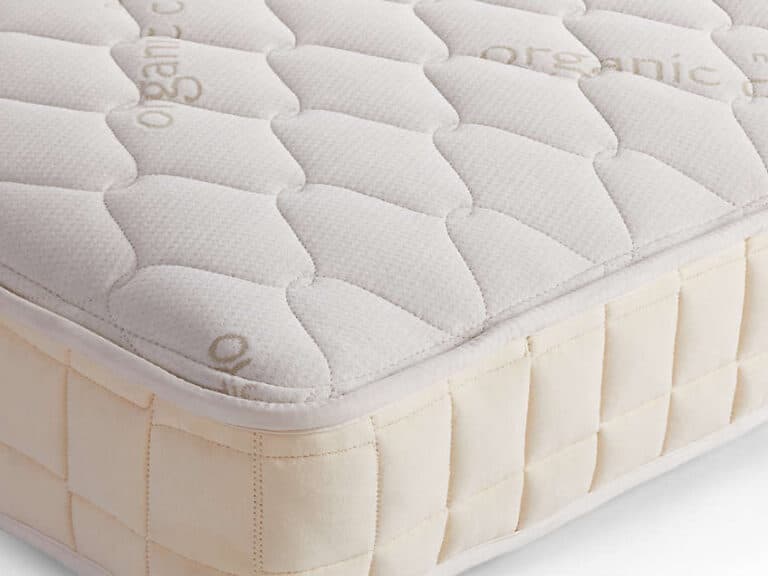
A warm room, heavy bedding, or a mattress that traps heat can make sleep less comfortable and contribute to nighttime waking. Early-summer light through thin curtains can do the same. These are among the easiest fixes on the list. If heat is your trigger, see our guide to the best mattresses for hot sleepers.
Hormonal shifts
For many women, 3 AM waking shows up alongside perimenopause and menopause, often with night sweats. If that’s you, it’s worth reading our piece on L-tryptophan for menopause-related sleep issues and talking with your provider.
Sleep apnea: the one not to ignore
Repeated waking, especially with gasping, choking, morning headaches, or loud snoring, can be a sign of obstructive sleep apnea, where breathing repeatedly stops and restarts overnight. This one is genuinely worth taking seriously; untreated apnea affects far more than sleep. If any of that sounds familiar, ask your doctor about a sleep study. Our overview of living well with sleep apnea and CPAP is a good starting point.
How To Stop Waking Up At 3 AM
You can’t force yourself back to sleep; trying harder usually makes it worse. What tends to work is reducing the triggers during the day and evening, and having a calm plan for the moments you do wake. Start here:
- Keep one wake-up time, seven days a week. A consistent wake time is one of the strongest anchors for your body clock, arguably more so than a consistent bedtime.
- Protect the back half of your night from alcohol. Finish any drinks 3–4 hours before bed, and keep them modest.
- Keep the bedroom comfortably cool, dark, and well ventilated. Add blackout curtains, and if your bed sleeps hot, address the mattress or bedding.
- Build a 30–60 minute wind-down. Dim lights, screens off or on night mode, and a “worry dump”: write tomorrow’s list and any anxieties on paper so your brain has less to rehearse at 3 AM.
- Don’t clock-watch. Turn the clock away. Doing the “how much sleep will I get” math tends to raise the very arousal that keeps you awake.
- If you feel you have been awake for about 20 minutes, get up without checking the clock. Leave the bedroom, keep the lights low, and do something quiet and boring until you feel sleepy again. Lying in bed frustrated can teach your brain to associate bed with wakefulness. This is the core of a technique called stimulus control, a well-established part of cognitive behavioral therapy for insomnia (CBT-I).
When To See A Doctor
Occasional 3 AM waking is normal and usually self-correcting. Talk to a healthcare professional if you notice any of the following:
- It happens most nights for more than a few weeks and is affecting your days.
- You wake gasping or choking, or a partner notices you snore loudly or stop breathing.
- You have frequent night sweats, palpitations, or wake feeling panicked.
- You’re relying on alcohol or over-the-counter sleep aids to get through the night.
- You take insulin or other glucose-lowering medication and wake with sweating, shakiness, or a racing heart. This can occasionally signal low overnight blood sugar and is worth flagging to your doctor.
These can point to conditions (sleep apnea, thyroid or hormonal changes, anxiety disorders) that are very treatable once identified.
The Bottom Line
Waking at 3 AM can feel personal, but it’s largely mechanical: the lightest part of your night meeting a gradual shift toward morning alertness, with a specific factor (stress, alcohol, temperature, hormones, or disordered breathing) often tipping a normal brief waking into a longer one. Use the table above to find your likely trigger, tighten up your wake time and wind-down, and give the get-up-if-you’re-awake step a genuine two-week trial.
Want to understand your natural sleep rhythms better? Our explainer on biphasic sleep puts middle-of-the-night waking in helpful historical context.
Frequently Asked Questions
Why do I always wake up around 3 AM?
Because the second half of the night is naturally lighter. Deep sleep is concentrated earlier, the later hours hold more easily interrupted REM sleep, and your circadian system gradually shifts the body toward morning alertness. A brief awakening in that window is normal; a specific trigger (such as stress, alcohol, room temperature, or disrupted breathing) may be what turns it into a longer one.
What does it mean spiritually or medically when you wake at 3 AM?
Spiritual interpretations are personal, but medically, recurring nighttime waking is usually examined through sleep patterns, stress, health conditions, medications, and the sleep environment. If it happens most nights and disrupts your day, it’s worth looking at those practical factors.
How do I fall back asleep at 3 AM?
Don’t clock-watch and don’t force it. If you’re still awake after about 20 minutes, get out of bed, keep the lights low, and do something quiet and boring until you feel sleepy, then return to bed. Slow breathing and keeping the room cool and dark can help too.
Can anxiety cause you to wake up at 3 AM?
Yes. Anxiety and daytime stress raise mental and physical arousal, which can make a normal nighttime awakening more noticeable and harder to fall back from. A wind-down routine and writing worries down before bed can both help reduce that arousal.
When should I see a doctor about waking up at night?
See a healthcare professional if it happens most nights for more than a few weeks, if you wake gasping or choking, if a partner notices loud snoring or pauses in your breathing, or if you have frequent night sweats or palpitations. These can signal treatable conditions like sleep apnea or hormonal changes.
Sources
- NHLBI, National Institutes of Health: How Sleep Works: Sleep Phases and Stages
- Sleep Foundation: Alcohol and Sleep
- U.S. Department of Veterans Affairs, Veterans Health Library: Stimulus Control for Insomnia
- NHLBI, National Institutes of Health: Sleep Apnea: Symptoms
- National Institute on Aging: Sleep Problems and Menopause: What Can I Do?
- American Diabetes Association: Hypoglycemia (Low Blood Glucose): Symptoms & Treatment
This article is for general informational purposes and is not a substitute for professional medical advice, diagnosis, or treatment. Always consult a qualified healthcare provider about persistent sleep problems or any health concern.