Last Updated: October 2, 2026
What can cats teach us about sleep position and relaxation?
Article Summary:
Cats naturally change sleep positions based on comfort, temperature, security, and relaxation. Their belly-up sleeping position, sometimes with the front legs stretched overhead, opens the chest, shoulders, and armpits while the body is fully supported. We explore the science behind this purrfect sleep position, including feline REM sleep, muscle relaxation, human neck and shoulder tension, nighttime arm numbness, and how mattress support affects the way our bodies rest.
Sleep Like a Cat
I was looking at a picture of a cat sleeping flat on his back, belly completely exposed, arms stretched over his head, armpits wide open, looking totally relaxed.
And I thought: Why do so many cats sleep like this?
We see it all the time. Cats curled into tiny balls, stretched across the couch, paws over their heads, or completely sprawled out like they don’t have a care in the world.
It made me curious about the science behind those positions and what, if anything, we can learn from the way cats relax and sleep.
I’m especially interested in it because I’m hypermobile, I carry a lot of tension through my neck and shoulders, and I sometimes wake up with my arms or hands tingling or numb. I’m always paying attention to how the body is supported in bed and what positions feel naturally relaxing.
So I started digging into what might actually be happening when a cat goes belly-up, opens the chest and armpits, stretches the arms overhead, and completely lets go.
Why Do Cats Sleep Belly-Up With Their Arms Overhead?
There isn’t one single reason cats sleep this way.
Like humans, cats change positions throughout the day and night depending on comfort, temperature, how deeply they’re sleeping, and what feels right in the moment.
Sometimes they curl tightly into a ball. Other times they stretch out as long as possible. And sometimes they end up on their backs with their legs and paws going in every direction.
Belly-up sleeping is a recognized feline sleep posture, and there’s something interesting about what it communicates. A cat’s abdomen contains vulnerable organs that instinct tells them to protect. When a cat sleeps on its back with that area completely exposed, it can be a sign that the cat feels safe, comfortable and secure in its environment.
Veterinary sources also note that the front paws may rest on the belly or stretch above the head in this position. So the cat that started this whole investigation isn’t quite as unusual as he looks.
Belly Up, Armpits Open, Everything Relaxed
One thing that stood out to me immediately was how open the cat’s upper body looked.
The chest was open. The armpits were exposed. The shoulders weren’t tucked forward. The front legs were stretched overhead instead of pulled in close to the body.
Cat people actually have a name for the base position: belly-up. But this particular version, with the front legs stretched all the way overhead, is what really caught my eye. I’ve started calling it the “goal post” position, since he looks like he’s signaling a touchdown.
That got me thinking about how different that is from the way many of us spend our day.
We type, drive, hold our phones, cook, work and carry things. Our arms are usually in front of us and our shoulders can spend hours in a more forward position.
When you lie back and let the arms move away from the body, everything changes position. The chest opens, the shoulders shift, and the muscles and connective tissues around the upper chest, shoulders and arms are no longer being held in the same way.
That doesn’t mean the position is magically therapeutic. It may simply feel good because the body is being supported while the front of the upper body gets a chance to open.
There’s More Going On in the Armpits Than You Might Think
The armpit is actually a pretty interesting anatomical area.
Its anatomical name is the axilla, and it’s the space where the upper arm, shoulder and side of the chest come together. It contains lymph nodes, blood vessels, nerves and connective tissues, with several muscles surrounding the area.
One of those muscles is the pectoralis minor, which sits at the front of the chest and connects to the shoulder blade. Research has associated a shortened pectoralis minor with changes in scapular movement and more forward positioning of the shoulder.
That doesn’t mean opening your arms is some kind of armpit detox, and I’m not interested in turning it into one.
What I find more interesting is the simple mechanical change: an area that spends much of the day relatively closed can move into a much more open position when the arms are raised and the body is supported.
Why Supported Relaxation Matters to Me
Because I’m hypermobile, I don’t automatically think “more stretching is better.”
I already have plenty of range of motion. What interests me about this kind of position is the idea of supported relaxation rather than pushing into a stretch.
If the back and shoulders are resting on the mattress, the arms can fall where they naturally feel comfortable instead of being actively held in position. The body doesn’t have to work as hard to stay there.
That distinction matters when you carry neck and shoulder tension. Sometimes the goal isn’t to stretch farther. Sometimes the goal is simply to stop holding so much tension.
What About Waking Up With Numb or Tingling Arms?
This is another reason the cat photo caught my attention.
I sometimes wake up with a hand or arm tingling or numb, and my friend Sammie experiences the same thing. It made me think about how we position our arms during sleep and whether there are more comfortable ways to support them.
Nighttime arm and hand numbness can happen for several reasons, including pressure on nerves or the position of the neck, shoulder, elbow or wrist.
That deserves its own article because there are multiple possible causes, and I don’t want to oversimplify it here.
But it does reinforce something I keep coming back to: how we position and support our bodies in bed matters.
Your Neck, Shoulders and Back All Share the Same Support System
When you lie down, your body isn’t resting in separate pieces.
Your pillow affects your head and neck. Your arm position affects your shoulders. Your shoulders connect into the upper back, and your hips and pelvis influence the lower spine.
Underneath all of it is the mattress.
That’s where this cat-inspired question starts connecting with the bigger conversation about sleep posture and back pain.
Your Mattress Has a Job Here, Too
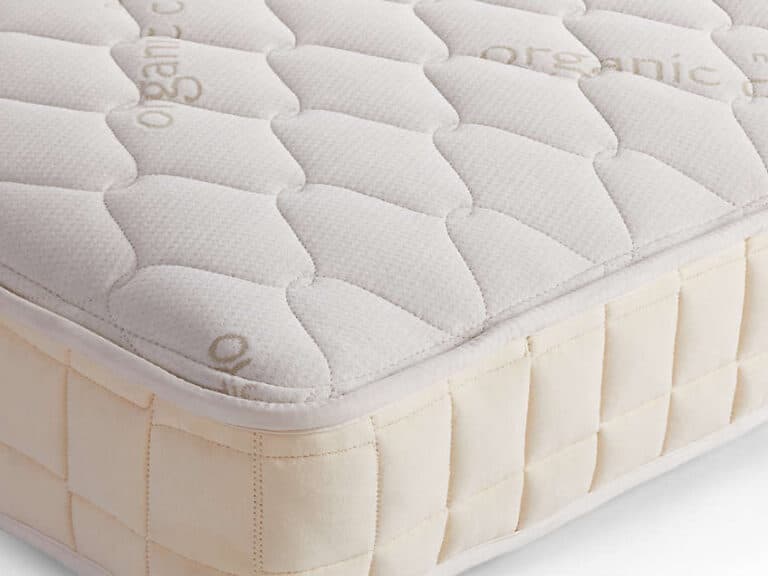
Whatever position you settle into, your mattress affects where your body sinks, where it’s supported and where pressure develops.
One widely cited randomized, double-blind controlled trial involving 313 adults with chronic nonspecific low-back pain compared medium-firm and firm mattresses. The people sleeping on medium-firm mattresses had better outcomes for pain while lying in bed, pain when getting up and disability than those sleeping on firm mattresses.
That’s a good reminder that firmer isn’t automatically better for your back.
Body weight, sleeping position, firmness, pressure relief and support all matter. Those are some of the same factors I look at when researching our Best Mattresses for Back Pain.
Your mattress should work with the way your body rests, not make your body work around the mattress.
Cats Know When to Curl Up and When to Sprawl Out
There’s another piece of actual cat sleep science that makes this even more interesting.
Cats change their sleeping positions for several reasons, including comfort, security and temperature regulation. Curling into a ball helps conserve body heat while also protecting the abdomen. When a cat sleeps on its back, that vulnerable belly is exposed, which is generally associated with feeling safe and secure.
And then there’s REM sleep, which has a surprisingly important connection to cats.
During REM sleep, cats experience atonia, the loss of postural muscle tone that keeps the body largely still while the brain is highly active. French neuroscientist Michel Jouvet’s work with cats beginning in the late 1950s helped establish the relationship between REM sleep and muscle atonia. His later experiments involving cats that lost normal REM atonia became foundational to understanding REM sleep behavior disorder in humans.
So when a cat looks completely floppy and relaxed during sleep, there really is some fascinating physiology behind it.
What We Can Learn From the Way Cats Sleep
The more I looked into this, the less I thought the lesson was about copying one particular cat sleeping position.
Watch cats sleep and they’re constantly adapting. They curl up when they want warmth, stretch out when they’re comfortable, sleep on their sides, stomachs and backs, throw their paws over their heads, expose their bellies, and somehow manage to occupy most of the bed.
That belly-up position also tells us something we can’t see just by looking at the mechanics of the pose. A cat willing to fall asleep with its most vulnerable area completely exposed generally feels safe enough to let its guard down.
And when a position stops being comfortable, cats move. They aren’t trying to achieve perfect sleep posture. They respond to comfort, temperature, security and what their bodies need in the moment.
That’s what caught my attention about the photo in the first place. The cat looked completely relaxed, with his belly up, armpits open and shoulders loose, as if every part of his body had finally stopped working for the day.
There may be something worth learning from that.
Purrfect sleep position.
MORE SLEEP TIPS: