Last Updated: June 19, 2026
What are light therapy glasses, and how can they support your sleep?
Article Summary:
This Re-Timer light therapy glasses review compares the older Re-Timer v2 with the newer Retimer 3, including comfort upgrades, blue-green light therapy, app features, pricing, and who the glasses may be best for. Sleep Examiner also looks at the research behind Re-Timer, independent tester feedback, and important eye-safety considerations for people with glaucoma risk, recent eye procedures, light sensitivity, or prescription glasses.
Re-Timer Light Therapy Glasses Review: Sleep Timing, Research, and Eye Safety
Affiliate disclosure: This article contains affiliate links, including links through Re-Timer and Amazon Associates. If you buy through them, Sleep Examiner may earn a small commission at no extra cost to you. I only write about products I have researched carefully, and I share the rough parts too.
I have been chasing better sleep since my 50s hit. Some of you know that story already. What is newer for me is what is going on with my eyes.
This year, I had Laser Peripheral Iridotomy, also called LPI, on my right eye to help lower my risk of narrow-angle glaucoma. So when a wearable comes along that promises better sleep by shining light toward your eyes every morning, I do not just look at whether the science is interesting. I also look at whether it is something I would personally feel comfortable putting in front of my retinas.
That is the lens I used for this Re-Timer Light Therapy Glasses review.
I looked closely at the older Re-Timer v2, the newer Retimer 3, the product specs, the available research, independent testing, buyer feedback, and the eye-safety question that matters a lot to me personally.
Here is what I found.
Quick take
Re-Timer is one of the more research-backed light therapy wearables I have come across. That matters because this category is full of LED gadgets that sound impressive but do not always have much behind them.
The Retimer 3 is the newer, lighter, more comfortable version. The older Re-Timer v2 is less expensive and still uses the same general blue-green light therapy concept. The biggest real-world difference is not that the Retimer 3 is a totally new technology. It is more that the newer model is lighter, more modern, easier to charge, and likely easier to tolerate if you are sensitive to bright light.
My biggest caution is eye safety. Re-Timer is UV-free and certified to an optical safety standard, which is good. But if you have glaucoma risk, recent eye surgery, retinal issues, strong light sensitivity, or you take medication that makes you more sensitive to light, this is something I would clear with an eye doctor before using.
That is the same standard I am applying to myself.
What Re-Timer actually is
Re-Timer is a pair of light therapy glasses. Instead of sitting in front of a large light box for 30 minutes in the morning, you wear the glasses as you go about your normal routine.
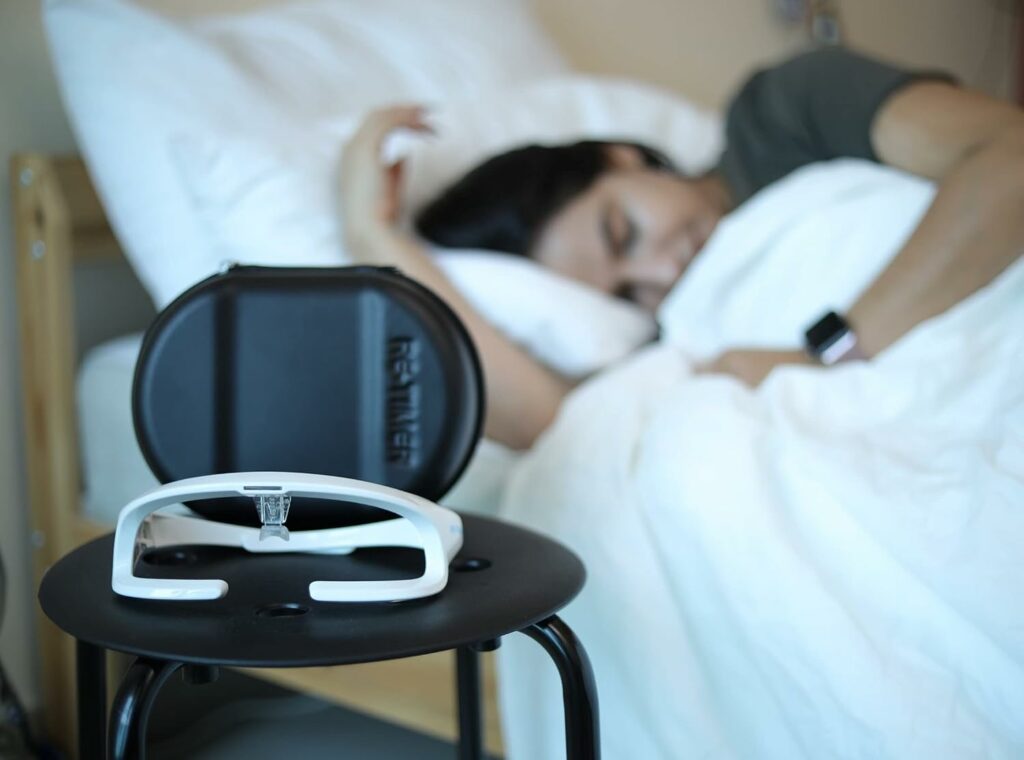
Re-Timer light therapy glasses are designed to be worn during a morning routine instead of sitting in front of a traditional light box.
The device sits below your eyes and shines a blue-green light upward toward them. The idea is to give your brain the kind of morning light signal it would normally get from natural sunlight. That morning light cue helps support your circadian rhythm, which is the internal body clock that influences when you feel sleepy, alert, hungry, and ready to wake up.
That is the whole point of this product. It is not a sleeping pill. It is not a sedative. It is not meant to knock you out at night.
It is a timing tool.
Used correctly, light therapy may help your body shift earlier or later, depending on when you use it. For example, morning light is often used to help people feel more awake earlier in the day and fall asleep earlier at night. Evening light can have the opposite effect, which is why timing matters so much with any circadian product.
Re-Timer uses blue-green light with a dominant wavelength around 500 to 504 nanometers. It is UV-free, which is important, and the company says the light is certified to the IEC 62471 photobiological safety standard for lamps and LED products.
The brand also says the device delivers about 506 lux at the eye. That number sounds much lower than a 10,000-lux light box, but Re-Timer argues that the light source sits much closer to your eye, so the delivery is different from sitting across from a lamp on a desk.
I would not describe this as a magic sleep gadget. The idea behind it is real, but it is only useful if the timing is right and you use it consistently.
Why I paid attention to this brand
The reason Re-Timer caught my attention is that it is not just another random wellness gadget with pretty marketing.
The company was formed to commercialize light therapy research from Flinders University in South Australia, connected to work led by Professor Leon Lack and the Adelaide Institute for Sleep Health. Re-Time says its first light therapy product launched in 2012, and the newer Retimer 3 is the latest version of that product line.
That gives Re-Timer a little more weight than a lot of sleep gadgets that borrow scientific language without much actual science underneath.
In the sleep space, there are plenty of products that sound impressive but do not have much real-world support behind them. Re-Timer appears to have more substance than that. The question is what the research really supports, where the evidence is still early, and whether the device makes sense for the person actually wearing it.
Re-Timer v2 vs. Retimer 3: what actually changed?
This was the question that sent me down the rabbit hole.
The older Re-Timer v2 and the newer Retimer 3 are easy to confuse because they are built around the same basic idea. The Retimer 3 is not a completely different type of light therapy. It is more of a redesigned, lighter, more comfortable version of the same core concept.
Here is the practical breakdown.
| Feature | Re-Timer v2 | retimer 3 |
|---|---|---|
| Weight | Heavier | About 36 grams, roughly half the weight of the v2 |
| Light | Blue-green, around 500 nm, UV-free | Same blue-green spectrum, slightly more diffused |
| Brightness | Two settings | Low and Regular settings |
| Charging | USB-B | USB-C |
| Battery | Up to about 6 hours of use | Rated up to 5.6 hours |
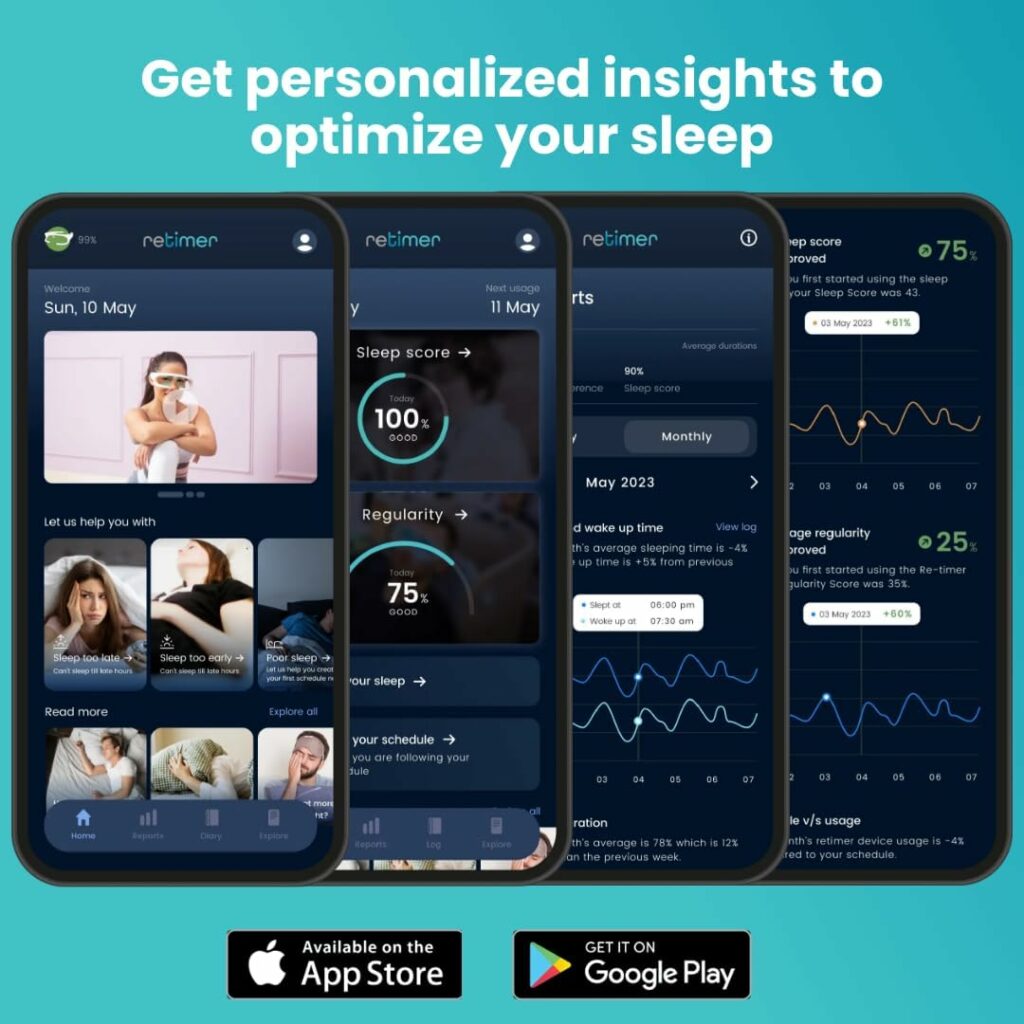
| App | Works with the Re-Timer app | Works with the app, plus deeper health-data integration |
| Fit | One nose piece | Three nose-piece sizes included |
| Best for | Lower-cost option with the established design | Lighter, more comfortable, modern version |
Tip: swipe left/right on the table if you are on a phone.
The short version: the Retimer 3 is the one I would personally lean toward if comfort matters. It is lighter, charges with USB-C, has a more updated app experience, and includes different nose-piece sizes so you can get a better fit.
The v2 still has a case for it. It costs less, and it still uses the same general blue-green light therapy approach. If price is the deciding factor, the older model may still make sense.
But for a product you wear on your face, comfort is not a small thing. If something feels annoying, heavy, too bright, or awkward, you are less likely to use it consistently. And with light therapy, consistency is the whole point.
Retimer 3 at a glance
For anyone who wants the hard numbers, here is the Retimer 3 on paper:
- Light: blue-green, around 500 to 504 nm dominant wavelength
- Brightness: about 506 lux according to the brand
- UV-free: yes
- Flicker-free: yes, according to independent testing
- LEDs: four LEDs with diffuser-cover technology
- Weight: about 36 grams
- Charging: USB-C
- Battery: rated up to 5.6 hours per charge
- Fit: includes small, medium, and large nose pieces
- App: available for iOS and Android
- Safety: certified to IEC 62471
- Warranty: 1 year
The recommended routine is simple. You wear the glasses for 30 to 60 minutes at the time recommended by the app. That timing depends on what you are trying to do, such as wake up earlier, fall asleep earlier, adjust to a new time zone, or support a more consistent sleep schedule.
What real people and independent testers are saying
This is where I want to be transparent.
Re-Timer does not have the same kind of giant review footprint you would see with a popular mattress, pillow, or mass-market wellness gadget. Part of that may simply be timing. The original Re-Timer product line has been around for years, but Retimer 3 is the newer version, with a Kickstarter campaign announced in 2024 and broader availability following that.
So the limited independent review pool does not automatically bother me. It does mean I am weighing the available feedback carefully.
The most useful independent review I found came from testers who measured light therapy glasses with equipment and also wore them in real life. Their take on Retimer 3 was pretty balanced, which I appreciate.
The positives were strong: light weight, no flicker, low EMF, decent comfort, and more research support than most competing light therapy glasses.
The negatives were practical: the light bar sits below your eyes, and that can feel visually awkward at first. Because the light source is below the eyes instead of above or directly in front, some people may find themselves looking around it until they get used to it. The same tester also measured less light reaching the eye than the company’s advertised 506 lux, which they explained could be affected by distance, face shape, and fit.
That is exactly the kind of thing I want to know before buying.
Not “this product is amazing, go buy it.”
More like: “This is probably one of the more legitimate devices in the category, but the fit and light placement may matter more than you think.”
The glasses-over-glasses issue
This matters for anyone who wears prescription glasses.
The older Re-Timer v2 was specifically marketed as being designed to fit over prescription glasses. The Retimer 3 can also be worn over glasses, but there may be some fit issues depending on your frames.
One tester found that a smaller pair of prescription glasses cast a shadow and blocked some of the green light from reaching the pupil. That is the kind of detail that could really matter in daily use.
If you wear prescription glasses in the morning and cannot comfortably use the device without them, I would pay close attention to the return policy. I would also test the fit right away, because if your frames block the light, the product may not work as intended.
One possible upside is that Re-Timer’s light is more green than pure blue, so some blue-light coatings may interfere with it less than they would with a pure blue-light device. But fit still matters.
The looks
Let’s just get this out of the way.
These are not cute.
Almost every honest reviewer says some version of the same thing. Re-Timer glasses look a little goofy. The Retimer 3 is lighter and more modern than the older version, but this is still a light therapy device sitting on your face.
I would think of these as something you wear at home with coffee, not something you wear through an airport pretending you are in a futuristic wellness commercial.
That does not bother me much. I have worn plenty of weird-looking wellness things in the name of feeling better. But it is worth saying plainly. If you care about how they look, these are more function than fashion.
What the research actually shows
This is where Re-Timer separates itself from a lot of other light therapy wearables.
The research around Re-Timer is broad. Studies have looked at delayed sleep-wake phase disorder, jet lag, fatigue, older adults with sleep disruption, mood symptoms, postpartum depression, PTSD, pain-related conditions, and cancer-related fatigue.
That sounds like a lot, and it is. But I do not want to overstate it.
The strongest and most relevant support is for circadian timing. That means helping shift sleep and wake patterns, supporting morning alertness, and helping the body adjust to a different schedule.
That is what the device is actually built for.
Some of the other research areas are interesting and promising, but they are not the same as saying Re-Timer is a proven treatment for depression, fibromyalgia, PTSD, cancer-related fatigue, or any medical condition. A lot of those studies are small, early, pilot-style, or condition-specific.
That does not make them useless. It just means the honest takeaway is more measured.
The fair version is this: Re-Timer has a credible research foundation for circadian rhythm support, with early research exploring other health-related uses. It is not a cure-all, and I would not buy it expecting it to solve every sleep or mood issue on its own.
Why the older-adult research stood out to me
The athlete and jet lag angle is interesting, but it is not the part that feels most relevant to my life.
I am more interested in the research involving older adults and people with disturbed sleep. That is closer to the reality for a lot of Sleep Examiner readers.
Sleep changes with age. Hormones change. Light exposure changes. Morning routines change. Some people get less natural outdoor light than they used to. And once your sleep gets fragmented, it can be hard to know whether your body clock is part of the problem.
That is why a wearable light therapy device is interesting. Not because it is trendy, but because it may be easier to use consistently than a big light box sitting on a desk.
If you can wear it while making tea, answering emails, feeding the pets, or walking around the house, that is a real advantage. The easier something is to fit into daily life, the more likely people are to actually use it.
The eye-safety question, which is personal for me
This is the part I cared about most.
Most affiliate reviews of light therapy glasses focus on sleep, energy, jet lag, and convenience. That makes sense. But for me, the first question was not “Will this help me wake up earlier?”
It was: “Should someone with my eye situation be using this at all?”
I recently had LPI on my right eye, and I am being monitored for glaucoma risk. That does not mean Re-Timer is automatically unsafe for me. But it does mean I am not casual about anything that shines light toward my eyes.
Here is the most balanced way I can put it.
For healthy eyes, UV-free bright light therapy is generally considered safe when used as directed. Re-Timer is UV-free, and the company says the device is certified to an optical safety standard. That is reassuring.
But there is a difference between “generally safe for healthy eyes” and “automatically appropriate for every person with an eye condition.”
Those are not the same thing.
One study that stood out to me looked at morning light therapy with Re-Timer glasses and measured changes in the eye. Healthy young adults used the glasses for 30 minutes each morning for seven days, and researchers measured a small but statistically significant increase in choroidal thickness. The choroid is the vascular layer behind the retina.
I am not reading that as a glaucoma benefit. I am not reading it as a danger signal either.
What it tells me is simpler: this light reaches the eye and can produce measurable changes in eye structure, at least in healthy young eyes over a short period of time.
That is interesting. It is also exactly why I want my ophthalmologist involved before I personally use it.
The study did not answer the questions I would care about most for someone like me. It did not study people with a narrow-angle glaucoma risk. It did not study people right after LPI. It did not measure long-term glaucoma outcomes. It did not tell me whether this is a good idea for my specific eyes.
So my personal decision is easy: I am not putting these on until my eye doctor signs off.
That is not fear. That is common sense.
Who should ask an eye doctor first?
I would be extra cautious if you have:
- Glaucoma or elevated eye pressure
- Narrow angles or a history of LPI
- Recent eye surgery
- Retinal disease or a history of retinal problems
- Strong light sensitivity
- Migraine triggered by light
- Prescription medications that increase light sensitivity
I would also be careful if you are under active eye monitoring and have not talked to your doctor about light therapy.
And one more thing, because the internet gets this mixed up: Re-Timer is not the same thing as red-light therapy for the eyes. Red-light therapy discussions often involve different wavelengths, such as 670 nm red or near-infrared light. Re-Timer uses blue-green circadian light. It is not an eye treatment. It is a circadian rhythm tool.
Do not assume claims about red-light therapy apply to this product.
What about mood disorders?
This is another place where caution matters.
Bright light therapy can affect mood and circadian timing. For many people, that is the point. But for people with bipolar-spectrum conditions, light therapy should be used only with medical guidance because it may increase the risk of triggering mania or hypomania in some cases.
That does not mean light therapy is bad. It means it is active enough to respect.
If you have a history of bipolar disorder, mania, or major mood instability, this is not something I would start casually without a clinician involved.
Who Re-Timer may be good for
Re-Timer makes the most sense for people who are trying to shift or stabilize their body clock.
That may include people who:
- Struggle to fall asleep until too late
- Want to wake up earlier and feel more alert in the morning
- Deal with jet lag from frequent travel
- Work shifts or irregular schedules
- Get very little natural morning sunlight
- Feel their sleep timing has drifted later over time
- Prefer a wearable light device over sitting in front of a light box
This is not really a “put it on once and sleep perfectly tonight” kind of product. Light therapy works through timing and repetition.
That means the app matters, your routine matters, and your willingness to use it consistently matters.
Who may want to skip it or wait
I would think twice if you:
- Have an eye condition and have not asked your eye doctor
- Recently had eye surgery
- Are very sensitive to bright light
- Wear small prescription frames that may block the light
- Want something stylish
- Expect instant results
- Do not want to follow timing instructions
- Have bipolar-spectrum concerns and are not under medical guidance
I would also skip it if you already get strong natural morning sunlight every day and your sleep timing is stable. Not every sleep issue needs a device.
Pricing and where to buy
The Retimer 3 is the newer model and is listed at about $220 USD when the store is set to US dollars. The older Re-Timer v2 is listed at a lower price, around $179 USD.
The store has a currency selector, so make sure you are viewing prices in your own currency before comparing. Re-Timer also appears to run promo codes at times, so it is worth checking the current offer before buying.
One thing I liked seeing is that Re-Timer states it covers customs, shipping, and tariff-related expenses for US customers. That matters because international shipping fees can get messy, especially when a product is coming from overseas.
As always, I would confirm the final price, shipping terms, return policy, and warranty before ordering.
Ready to look?
- Shop the Retimer 3: the lighter, newer model I would personally choose. Also available on Amazon.
- Shop the Re-Timer v2: the lower-priced established option. Also available on Amazon.
Which one would I choose?
Between the two, I would choose the Retimer 3.
The older Re-Timer v2 still has value, especially if you want the lower price. But the Retimer 3 is lighter, more modern, has USB-C charging, includes multiple nose pieces, and appears to have a slightly softer, more diffused light experience.
For me, that matters.
I am sensitive to anything that feels too bright, awkward, or irritating. If a product is going to sit on my face for 30 to 60 minutes in the morning, comfort is not a luxury feature. It is the difference between using it and letting it sit in a drawer.
Hands-on questions I would want to answer
This is the kind of product where the specs and research matter, but so does the lived experience of wearing it.
Because Re-Timer reached out to Sleep Examiner, I have asked if they can send a Retimer 3 for additional hands-on notes. If they do, these are the practical things I would want to report back on:
- How comfortable it feels during a full 30 to 60 minute session
- Whether the Low setting feels gentle enough for light-sensitive eyes
- Whether it works comfortably over prescription glasses
- Whether the below-eye light bar feels distracting
- How useful the app actually is
- Whether the timing recommendations are easy to follow
- Whether the device feels practical during a normal morning routine
- Whether my eye doctor has any concerns based on my history
That last one is the big one for me.
I can be interested in the product and still be careful with my eyes. Those two things can exist at the same time.
My verdict
Re-Timer is one of the more legitimate wearable light therapy products I have researched. The science behind circadian light therapy is real, and Re-Timer has a stronger research foundation than many sleep gadgets in this category.
The Retimer 3 is the model I would choose over the older v2 because it is lighter, more comfortable, more modern, and easier to work into a daily routine. The v2 still makes sense if price matters most and you want the more affordable version of the same basic concept.
The honest caveats are important. The independent review footprint is thin, although that makes more sense when you realize Retimer 3 is still a newer version of an older product line. The glasses are not stylish. The light bar may take some getting used to. Prescription glasses may affect how well the light reaches your eyes. And if you have eye concerns, this is not something I would use without getting medical clearance first.
For my own situation, the product is interesting, the science is real, and the category makes sense. But my eyes come first.
I am waiting on my ophthalmologist before I personally wear a pair. If you have glaucoma risk, recent eye surgery, retinal concerns, or strong light sensitivity, I would suggest you do the same.
Better sleep is worth pursuing. It is not worth guessing when your vision is involved.
Frequently Asked Questions
What are Re-Timer light therapy glasses used for?
Re-Timer light therapy glasses are used to support circadian rhythm timing by delivering blue-green light near the eyes, usually in the morning or at a timed point recommended by the app.
What is the difference between Re-Timer v2 and Retimer 3?
Retimer 3 is the newer model. It is lighter, uses USB-C charging, includes multiple nose pieces, and offers a more updated app experience, while Re-Timer v2 is the older, lower-priced option.
Are Re-Timer light therapy glasses safe for your eyes?
Re-Timer glasses are UV-free and certified to an optical safety standard, but anyone with glaucoma risk, recent eye surgery, retinal concerns, strong light sensitivity, or photosensitizing medication should ask an eye doctor first.
Can Retimer 3 help with sleep?
Retimer 3 may help support sleep timing by giving the body a timed light signal that can help shift or stabilize the sleep-wake schedule. It is not a sleeping pill and works best with consistent timing.
Product review note: Re-Timer reached out to Sleep Examiner about reviewing the Retimer 3. As with all Sleep Examiner reviews, this article is based on product research, published specs, available studies, independent tester feedback, buyer reviews where available, and our overall analysis of who the product may or may not be right for. Because wearable light therapy depends so much on comfort, brightness, fit, and ease of use, I have also asked Re-Timer to send a pair so I can add hands-on follow-up notes about real-life use.
This article is for general information and is not medical advice. Light therapy can affect people differently. Anyone with an eye condition, recent eye surgery, a mood disorder, or medication that increases light sensitivity should consult a qualified healthcare or eye-care professional before starting. If you are struggling with persistent sleep problems, a conversation with your doctor is the right first step.
Re-Timer Light Therapy Glasses Review
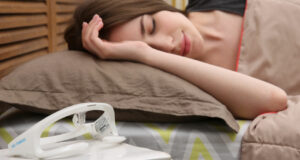
Re-Timer light therapy glasses review comparing Retimer 3 and Re-Timer v2, including sleep timing benefits, research, app features, pricing, and eye-safety considerations.
Product Brand: Re-Timer
4.2