Last Updated: October 13, 2026
What is the best mattress for back sleepers?
Article Summary:
The best mattresses for back sleepers combine steady support beneath the hips with enough cushioning to follow the natural curve of the lower back. Our picks include the Back Science Series 2 and Series 1, Avocado Green Standard Firm, Leesa Oasis Chill Hybrid, Tuft & Needle Mint Hybrid, and Air-Pedic 800/850. Each offers a different approach to comfort, from firm hybrids and cushioned hybrids to adjustable air support. The right choice depends on your body weight, preferred feel, and whether you spend the whole night on your back or change positions.
How we selected these mattresses: This roundup draws on Sleep Examiner’s published reviews, manufacturer information, available third-party testing, and owner feedback. It is a research-based comparison, not a new hands-on test of all six mattresses. Category labels reflect our editorial selections within this reviewed group; they do not mean a mattress is the best fit for every back sleeper.
What Are the Best Mattresses for Back Sleepers?
The best mattress for a back sleeper is one that supports the hips and lower back while providing enough cushioning to feel comfortable. Our six recommendations cover different preferences, including firm support, organic latex, cooling-focused hybrids, and adjustable air beds.
Choosing between them starts with how you want the mattress to feel. Some back sleepers prefer a stable surface with very little sink. Others enjoy more contouring around the lower back. If you also sleep on your side, the mattress needs enough cushioning for your shoulders and hips in that position, too.
Back-Sleeper Mattress Comparison
| Mattress | Our pick for | Construction | Feel of the reviewed option | Main consideration |
|---|---|---|---|---|
| Back Science Series 2 | Best overall | Hybrid | Luxury firm | Balanced cushioning with targeted lumbar support |
| Back Science Series 1 | Best firm support | Hybrid | Firm | More lift and less surface cushioning |
| Avocado Green Standard Firm | Best organic option | Latex hybrid | Firm | Responsive support without a deep foam hug |
| Leesa Oasis Chill Hybrid | Best cooling-focused option | Foam hybrid | Cushion firm | Cooling features with a cushioned surface |
| Tuft & Needle Mint Hybrid | Best responsive feel | Foam hybrid | Medium firm | Easier repositioning with a buoyant surface |
| Air-Pedic 800/850 | Best adjustable support | Adjustable air with foam comfort layers | Adjustable | Separate control of lumbar support and comfort settings |
Why Back Sleepers Need the Right Balance of Support and Cushioning
Back sleeping spreads your weight differently than side sleeping. Your shoulders, hips, and heels contact the mattress, while the curve of your lower back needs a surface that follows your shape without leaving you feeling unsupported.
A mattress that allows the pelvis to settle too deeply may create an uncomfortable sagging sensation. An excessively hard surface can create pressure or fail to provide the contouring you prefer. That is why firmness alone does not tell you whether a mattress will work.
Support comes from the mattress’s underlying structure. Firmness describes how the surface feels. A mattress can have a cushioned top and a stable support core, or feel very firm while offering little pressure relief. Our selections cover both firm and more conforming options so you can choose the balance you prefer.
Our Top Mattress Recommendations for Back Sleepers
Back Science Series 2: Best Overall
Feel: Luxury firm
Construction: Hybrid with Hypergel comfort layers, Lumbar-Flex zoning, and individually wrapped coils
The Back Science Series 2 is our overall pick because it combines targeted midsection support with more cushioning than the firmer Series 1. Its luxury-firm feel makes it a useful starting point for back sleepers who want support without choosing the most rigid surface in the lineup.
Our published review scores the Series 2 10/10 for back alignment and overall support and 10/10 for sleeping position compatibility. Its design emphasizes lift beneath the lumbar region and hips, while the comfort layers provide some give at the surface. It is also the more versatile Back Science choice for people who turn onto their sides during the night.
Pros
- Targeted lumbar support paired with surface cushioning.
- More adaptable to mixed sleeping positions than Series 1.
- Reinforced edges and a coil support system.
Cons
- Premium pricing compared with simpler boxed mattresses.
- Full-size delivery requires planning for access and setup.
- Readers who enjoy slow, deep memory foam contouring may prefer a different feel.
Choose it if: You want a balanced hybrid with lumbar support and spend most of the night on your back, but sometimes sleep on your side.
Read our Back Science Series 2 review.
Back Science Series 1: Best Firm Support
Feel: Firm
Construction: Hybrid with thinner Hypergel comfort layers, Lumbar-Flex zoning, and individually wrapped coils
The Back Science Series 1 is the more direct fit for back sleepers who want a firm, lifting surface. It shares the brand’s lumbar-support approach but has less comfort-layer depth than the Series 2, putting the emphasis on stability rather than plush cushioning.
Our review scores it 9.5/10 for back alignment and overall support and 8.5/10 for sleeping position compatibility, positioning it primarily for back sleepers. Several shared-category scores follow the Series 2 because the models share support technologies and policies; they do not represent separate hands-on testing of every Series 1 category. It also costs less than the Series 2, making it an alternative for readers who prefer a firmer feel and do not need the extra cushioning of the higher models.
Pros
- Firm feel with limited surface sink.
- Targeted support beneath the midsection.
- Lower-priced entry into Back Science’s hybrid lineup.
Cons
- Less cushioning for sensitive shoulders and hips.
- May feel too firm for lighter sleepers or frequent side sleepers.
- Full-size delivery can be less convenient than a compressed boxed bed.
Choose it if: You mainly sleep on your back and prefer resting on top of the mattress rather than settling deeply into it.
Read our Back Science Series 1 review.
Avocado Green Standard Firm: Best Organic Option
Feel: Firm
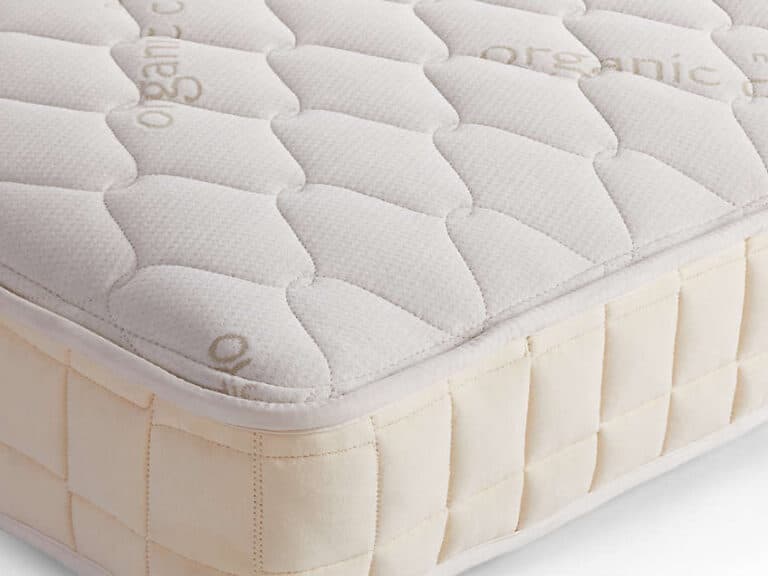
Construction: Latex hybrid with cotton, wool, and zoned pocketed coils
The Avocado Green Standard Firm is our organic pick for back sleepers who prefer a responsive surface. Its latex-and-coil construction has a different feel from slow-moving memory foam: it cushions with more pushback and less of a deep hug.
Our review gives the Standard Firm 7.8/10 for back alignment and overall support and 8/10 for sleeping position compatibility, identifying it as especially suitable for back and stomach sleepers. The firm profile is important here. Avocado offers other comfort options, but this recommendation refers specifically to the firmer version covered in our review.
Pros
- Natural and organic materials are central to its construction.
- 9/10 for cooling and 10/10 for eco-friendliness and off-gassing in our review.
- Firm support for readers who dislike deep sinkage.
Cons
- Low third-party customer ratings: our published review lists Trustpilot 1.8/5 and ConsumerAffairs 2.1/5.
- May feel unforgiving to lighter sleepers who need more contouring.
- Latex has a springier feel that does not suit everyone.
- Frequent side sleepers may prefer more surface cushioning.
Choose it if: You prioritize organic materials and want firm, buoyant support rather than close memory foam contouring.
Read our Avocado Green Standard Firm review.
Leesa Oasis Chill Hybrid: Best Cooling-Focused Option
Feel: Cushion firm
Construction: Foam hybrid with a cooling quilted cover, copper-infused memory foam, and zoned coils
The Leesa Oasis Chill Hybrid is our cooling-focused selection for back sleepers who want cushioning over a supportive coil base. Its cushion-firm design combines a contouring surface with underlying support, rather than the more rigid feel of a true firm mattress.
Our review gives the Oasis Chill 9/10 for cooling, 9/10 for edge support, and 7.5/10 for sleeping position compatibility, with back and combination sleepers among its recommended users. However, cooling experiences vary, and the cover and foam features do not guarantee that every sleeper will stay cool all night.
Pros
- Cooling-oriented cover and comfort materials.
- Cushioned surface over zoned coil support.
- Reinforced edges for using more of the sleep surface.
Cons
- Some owners report softening or durability concerns.
- Sensitive partners may notice movement through the coil system.
- Heavier back sleepers should consider reports of greater hip sinkage.
Choose it if: You sleep warm and want a cushioned hybrid, while still prioritizing support beneath the hips.
Read our Leesa Oasis Chill Hybrid review.
Tuft & Needle Mint Hybrid: Best Responsive Feel
Feel: Medium firm
Construction: Adaptive foam and coils
The Tuft & Needle Mint Hybrid is our choice for back sleepers who want cushioning but also value easy movement. Its foam-and-coil construction provides a buoyant feel that can be appealing if you turn frequently or dislike feeling nestled deeply in memory foam.
Our published review gives the Mint Hybrid 8/10 for back alignment and overall support and 9.5/10 for sleeping position compatibility. It describes balanced support and a medium-firm feel, with back sleepers among its recommended users. It provides another route to comfort for people who care more about responsiveness than pronounced contouring.
Pros
- Responsive surface for repositioning.
- Medium-firm balance of cushioning and support.
- Coil construction and foam comfort layers offer a different feel from all-foam beds.
Cons
- Some partner movement may be noticeable.
- May provide insufficient cushioning for sensitive side sleepers.
- Costs more than the brand’s simpler foam options.
Choose it if: You sleep on your back, change positions often, and prefer a lively hybrid feel.
Read our Tuft & Needle Mint Hybrid review.
Air-Pedic 800/850: Best Adjustable Support
Feel: Adjustable
Construction: Multi-zone adjustable air support with foam comfort layers
The Air-Pedic 800 and 850 take a different approach from mattresses with one fixed firmness. Their multi-chamber design allows the lumbar section to be adjusted separately from other areas, giving back sleepers more control over support beneath the midsection.
Our review scores Air-Pedic 4/5 for back support on its 5-point scale and highlights separate lumbar control as a key distinction. It can be useful for couples with different preferences or readers who want to experiment with support settings instead of committing to one factory-set feel. The 800 and 850 should still be compared individually because their comfort configurations differ.
Pros
- Separate lumbar adjustment for more targeted support control.
- Independent settings accommodate different comfort preferences.
- Firmness can be changed after the mattress is installed.
- Our review praises the knowledgeable, helpful customer service.
- Optional AirFlow cooling adds ventilation for sleepers who run warm; it costs extra.
Cons
- A higher-cost and more complex system than a conventional mattress.
- Heavy, fully assembled delivery makes moving and setup more difficult.
- Some buyers report slow delivery.
- Some couples may notice a water-bed-like feel when changing positions.
- Couples who sleep together in the center may find separate-side settings less useful. The review describes trenching as less likely than on other air beds, rather than identifying it as a confirmed problem with these models.
Choose it if: Adjustable lumbar support is a priority and you are comfortable spending time dialing in the settings.
Read our Air-Pedic 800/850 review.
Ideal Mattress Firmness for Back Sleepers
Medium to medium-firm is a useful starting point for many back sleepers, but it is not a rule. Your mattress should allow some contouring while supporting your hips comfortably. A firm surface can suit readers who prefer very little sink, while a more cushioned surface may feel better to those who want closer contact around the lower back.
Firmness describes surface feel; support describes how the mattress holds your body. The hardest mattress is not automatically the most supportive. A cushioned mattress with a stable core can be a better fit than an extra-firm mattress that creates uncomfortable pressure.
Within this roundup, Series 1 emphasizes firm lift, while Series 2 combines support with more cushioning. Air-Pedic lets you adjust support rather than choosing one fixed setting.
How Body Weight Affects Mattress Feel for Back Sleepers
Body weight changes how deeply you compress a mattress, which affects both surface comfort and the support you experience.
Lighter sleepers generally compress comfort layers less and may experience a mattress as firmer. Some cushioning can help the surface follow the body without feeling rigid.
Average-weight sleepers may find medium or medium-firm a comfortable starting point. Personal preference still matters: a responsive latex hybrid and a conforming foam mattress can feel very different despite similar firmness labels.
Heavier sleepers compress comfort layers more and may need stronger underlying support or a firmer option to avoid excessive settling at the hips. A high firmness number alone does not establish suitability; the comfort layers and support core matter together.
These are starting points rather than guarantees. Body shape, material response, and whether you change positions also affect comfort. The home trial is your opportunity to assess the exact mattress for yourself.
Mattress Materials That Work Well for Back Sleepers
Memory Foam
Memory foam follows the body’s contours and can provide close cushioning around the lower back. The support layers beneath it still need to prevent uncomfortable settling at the pelvis. It is a useful option for back sleepers who enjoy a hugging feel, but less appealing to readers who prefer immediate bounce.
Explore our best memory foam mattresses for more options.
Hybrid Mattresses
Hybrids combine foam or latex comfort layers with a coil support system. They can balance cushioning with responsiveness, although their firmness and contouring vary widely.
Back Science Series 1 and Series 2, Leesa Oasis Chill Hybrid, and Tuft & Needle Mint Hybrid offer different versions of that balance. Compare the feel of the exact model rather than assuming every hybrid provides the same support.
Latex Mattresses
Latex provides cushioning with a more buoyant response than traditional slow-moving memory foam. It can appeal to back sleepers who want pressure relief without feeling deeply enclosed by the surface.
Avocado Green Standard Firm pairs latex with zoned coils. Its firm profile is best considered by readers who prefer pushback and less sink, rather than those seeking a plush mattress.
Adjustable Air Mattresses
Adjustable air mattresses use air chambers to change support settings beneath the comfort layers. Some offer independent settings for partners, and designs such as Air-Pedic add separate control beneath the lumbar region.
This flexibility can be useful when one fixed firmness does not suit your preferences, but it adds cost and complexity. The foam above the chambers also influences feel, so adjustable support does not make every model feel the same.
Pressure Relief and Spinal Alignment
For back sleeping, a comfortable mattress should support your body’s natural curves without making you feel as though your hips have dropped into a depression. Cushioning should also allow your shoulders and other contact points to rest comfortably.
If the surface feels too hard, you may notice pressure rather than comfortable contact. If it feels too soft, you may notice excessive settling around the pelvis. Neither sensation means everyone needs the opposite extreme; often the better match is a different balance of cushioning and underlying support.
Lumbar zoning is one way manufacturers address that balance, but it is not essential for everyone. Your comfort on the actual mattress matters more than the presence of a feature on its label.
Back Sleeping and Back Pain Are Different Shopping Needs
This guide focuses on mattresses suited to a sleeping position. Back pain is a separate consideration, and no mattress can guarantee relief or address every cause of discomfort.
If pain is central to your purchase decision, explore our best mattresses for back pain for a closer look at support and comfort tradeoffs. Persistent or worsening pain deserves medical evaluation rather than repeated mattress changes alone.
Signs Your Mattress May Not Be Right for Back Sleeping
Possible signs of a poor comfort match include:
- Feeling as though your hips settle much lower than your upper body.
- Uncomfortable pressure at your shoulders, hips, or heels.
- Repeatedly shifting because you cannot find a comfortable resting position.
- Difficulty turning because you feel deeply enclosed by the surface.
- Visible sagging or impressions that change how the bed supports you.
These signs are reasons to assess the mattress, foundation, and pillow together. Morning discomfort can have other causes, so it does not prove that the mattress is responsible.
Additional Sleep Tips for Back Sleepers
Your pillow and foundation affect comfort alongside the mattress. Choose a pillow height that feels comfortable beneath your head and neck without pushing your chin sharply toward your chest.
Some back sleepers find a small pillow beneath the knees comfortable. Treat it as an optional adjustment rather than a requirement, and remove it if it makes you feel worse.
Use the foundation specified by the mattress manufacturer. An unsuitable or damaged base can change how the bed feels and may affect warranty eligibility.
During a home trial, assess the mattress in your usual sleeping positions. If you also turn onto your side, consider shoulder and hip comfort as well as back support. See our best mattresses for side sleepers for that position’s priorities.
Before buying, check the exact model’s break-in requirement, return charges, pickup arrangements, and exchange terms. Policies and prices can change, and seller terms may differ.
Frequently Asked Questions
What firmness is best for back sleepers?
Many back sleepers start with medium or medium-firm, but the best feel depends on body weight and comfort preference. Some prefer firm support with little sink; others need more cushioning to feel comfortable around the lower back.
Are memory foam mattresses good for back sleepers?
They can be. Memory foam can follow the body’s curves, but the underlying support must keep the pelvis from settling uncomfortably.
Are hybrid mattresses good for back sleepers?
Yes, a suitable hybrid can combine cushioning with a stable coil base. However, hybrids vary widely in firmness and comfort-layer depth, so construction type alone does not establish suitability.
Do back sleepers need lumbar zoning?
Not necessarily. Zoned support may be useful, but an evenly supportive mattress can also be comfortable. The important question is how the mattress fits your body, not whether it has a particular feature on its label.
Which pick should I consider if I dislike sinking into a mattress?
Start with the Back Science Series 1 or Avocado Green Standard Firm. If you want a responsive surface with more cushioning, consider the Tuft & Needle Mint Hybrid.
Final Thoughts
The Back Science Series 2 is our starting point for balanced support and cushioning. Choose Series 1 if you prefer a firmer surface, or Avocado Green Standard Firm if organic materials and buoyant latex appeal to you.
The Leesa Oasis Chill Hybrid emphasizes cooling features, and Tuft & Needle Mint Hybrid suits readers who value responsiveness. For adjustable lumbar support, compare the Air-Pedic 800 and 850.
Choose the feel you can comfortably rest on, then use the home trial to evaluate that exact mattress against your own needs.
Affiliate disclosure: Sleep Examiner may earn a commission if you purchase through affiliate links, at no additional cost to you.