Last Updated: August 6, 2026
A Quick Guide to Organic Mattress Materials
Article Summary:
An organic mattress uses agricultural materials such as cotton, wool, or natural latex that meet recognized organic standards. Certification may cover the finished mattress or only specific components, and that difference matters. The words “organic,” “natural,” and “non-toxic” describe different qualities and should not be treated as interchangeable. Before paying more for an organic bed, check the complete materials list, confirm exactly what is certified, and make sure the firmness and construction fit the way you sleep.
Organic Mattresses Explained: Certified Materials, Real Benefits, and What to Check Before Buying
Part 1: What Qualifies a Mattress as Organic?
Part 2: What Are Organic Mattresses Made Of?
Part 3: Organic vs. Natural vs. Non-Toxic
Part 4: Benefits and Drawbacks
Part 5: What to Check Before Buying
Mattress companies use words like “organic,” “natural,” “clean,” and “eco-friendly” so often that they can begin to sound interchangeable. They are not.
So, what is an organic mattress? It is a mattress made with qualifying materials that are grown and processed according to recognized organic standards. However, the organic label does not tell you how soft, firm, cool, or supportive a mattress will feel. Organic models include all-latex beds, latex hybrids with coils, and latex-free innersprings made with organic textiles.
Here is what the organic label can tell you, what it cannot, and what to check before paying more for an organic bed.
What Qualifies a Mattress as Organic?
In practical terms, an organic mattress contains independently certified agricultural materials such as cotton, wool, or natural latex. It may also carry certification for the finished product.
A company may describe a mattress as natural because it contains cotton or latex. That claim alone does not prove the materials were organically grown or independently audited.
Certification can also apply at different levels:
- A mattress may use a GOTS-certified organic cotton cover.
- Its latex layer may be GOLS-certified organic latex.
- The finished mattress may carry its own certification covering the product and manufacturing process.
These standards also set minimum content thresholds. GOTS requires at least 95% certified organic fibers for its “organic” grade, or 70% for its “made with organic materials” grade, while GOLS requires latex to contain more than 95% certified organic raw material. That is why the exact label grade matters as much as the logo itself.
These claims have different scopes. An organic cotton cover does not make every layer organic, so check whether the certification applies to one component or the finished mattress.
Steel coils, zippers, and other nonagricultural parts cannot be “grown organically.” They can still be used in a certified mattress when they meet the applicable standard’s requirements. This is why “organic mattress” does not mean that every physical part of the bed is organic.
What Are Organic Mattresses Made Of?
Most organic mattresses use some combination of the following materials.
Organic Cotton
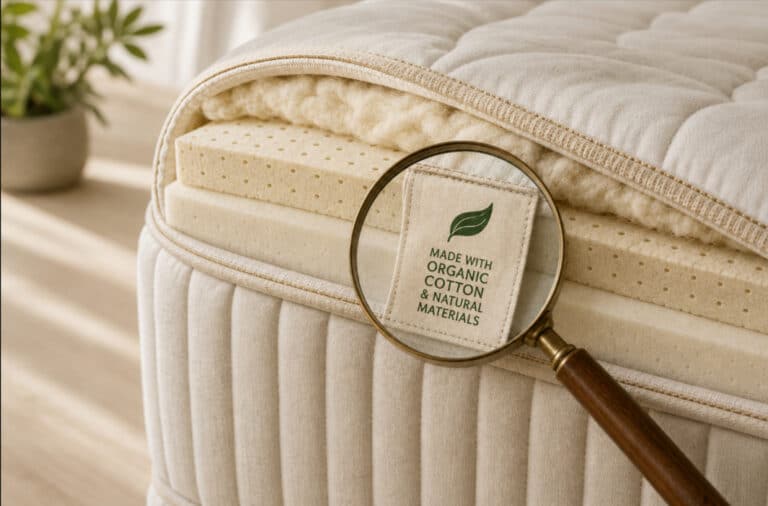
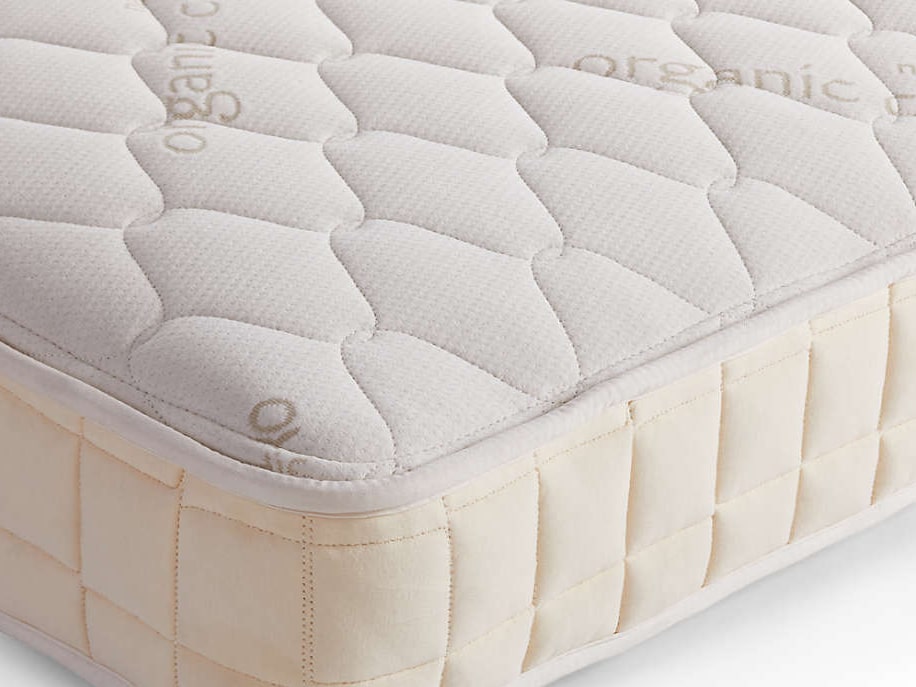
Organic cotton commonly appears in mattress covers, batting, and interior fabric. It is soft and breathable, but an organic cotton claim says nothing about the latex, support core, adhesives, or fire barrier.
Organic Wool
Wool may serve as batting, a temperature-regulating layer, or part of a mattress’s fire barrier. It can help manufacturers meet federal flammability requirements without fiberglass or certain chemical flame-retardant treatments.
Not every wool layer is organic, and not every organic mattress contains wool. Vegan and wool-free mattresses use other approved materials to create their covers and fire barriers.
Organic Natural Latex
Natural latex is made from rubber-tree sap. Organic latex certification addresses the source and processing of that material.
Latex has a responsive feel. It gently cushions the body but usually does not create the deep, slow sink associated with memory foam. It is also durable and naturally more breathable than dense polyurethane foam, although the complete mattress construction still determines how warm or cool the bed feels.
Natural latex may come from rubber-tree sap without carrying organic certification. Some latex foams also blend natural and synthetic latex, so check the stated composition. Latex also comes in two main types, Dunlop and Talalay, which feel and perform differently.
Steel Coils
Many organic mattresses pair latex and organic textiles with an innerspring support system. Coils can improve airflow, edge support, and ease of movement.
An all-latex model replaces the coil unit with additional latex layers. These mattresses tend to be heavier, but they may appeal to shoppers who want a foam-style construction without polyurethane or memory foam.
Organic vs. Natural vs. Non-Toxic Mattresses
These terms overlap, but they answer different questions.
Organic vs. Natural vs. Non-Toxic at a Glance
| Term | What It Usually Means | What to Verify |
|---|---|---|
| Organic | Certain agricultural materials, or the finished mattress, meet a recognized organic standard | Which components are certified, the certification scope, label grade, and license number |
| Natural | The mattress contains materials derived from natural sources, such as cotton, wool, or natural latex | The percentage and source of each material, since “natural” alone does not prove organic certification |
| Non-toxic | A broad marketing claim suggesting fewer substances of concern | The exact materials and independent testing behind the claim; no mattress can be assumed completely free of chemicals |
| Low-VOC | The product has been tested to emit low levels of certain volatile organic compounds | Which standard was used and whether testing applies to the finished product |
A natural mattress may have no organic certification, while a low-emissions mattress may contain no organic materials. An organic-material claim also does not reveal how the finished mattress performs in emissions testing.
If the logos and label language feel confusing, our guide to organic mattress certifications explains what GOTS, GOLS, GREENGUARD Gold, OEKO-TEX Standard 100, and MADE SAFE actually verify.
Potential Benefits of an Organic Mattress
More Transparent Material Sourcing
Credible certifications document the chain of custody for covered materials and give shoppers a way to verify a brand’s claims.
Less Reliance on Synthetic Foam
Many organic mattresses use natural latex instead of polyurethane foam or memory foam. Mattresses certified to stricter finished-product standards may also restrict certain adhesives, dyes, processing chemicals, and flame-retardant materials.
That does not make a mattress “chemical-free.” Everything is made of chemicals, including cotton, wool, and latex. The meaningful question is which substances and processes are allowed under the certification.
Breathable Materials
Cotton, wool, latex, and coils can create a more breathable design than dense foam. Wool helps manage moisture, latex tends to retain less heat than slow-response foam, and coils allow air to move through the support core.
Cooling still varies by model. A thick plush design may sleep warmer than a firmer latex hybrid even when both use organic materials.
Durable Construction
Natural latex is resilient and often holds its shape longer than lower-density polyurethane foam. Durability still depends on latex quality, layer thickness, sleeper weight, foundation support, and overall construction.
Environmental and Processing Standards
Organic standards can address how agricultural fibers are grown and how certified materials are processed. Some standards also include wastewater, chemical-input, traceability, and worker-protection requirements. The environmental value depends on the scope of the certification, not simply the presence of an organic logo.
Possible Drawbacks
Higher Prices
Certified materials, independent auditing, and specialized manufacturing generally cost more. Queen-size organic and natural mattresses often start around $1,000 and can exceed $3,500 for premium or customizable designs.
Price alone is not proof of better materials. A costly mattress can still rely on vague claims, while a more affordable model may provide clear certificates and a complete materials list.
A Different Feel From Memory Foam
Latex is springier and more responsive than memory foam. That makes it easier to change positions, but sleepers who want a deep, body-hugging feel may find some latex beds too buoyant or firm.
Weight and Setup
Latex is dense. Organic latex mattresses, especially all-latex models, can be difficult for one person to move, rotate, or assemble.
Fewer Truly Plush Choices
Organic mattresses are available in a growing range of firmness levels, but the category still leans toward responsive latex and supportive hybrid designs. Side sleepers should pay close attention to comfort-layer thickness rather than assuming every pillow-top will provide enough pressure relief.
Natural Materials Can Still Have an Odor
Wool and latex may have a mild earthy, rubbery, or barn-like scent at first, even without the familiar “new foam” smell of some polyurethane beds.
What to Check Before Buying
Read the Complete Materials List
Look beyond the cover. A brand should identify the comfort layers, support core, fire barrier, adhesives, and synthetic materials.
Check What Is Actually Certified
Is the cotton certified? The latex? The finished mattress? A row of logos may not apply to every layer.
Verify the Certification
Look for a current license or certificate number and check the certifying organization’s public database when available. The listing may use the manufacturer or parent company’s name rather than the retail brand.
Choose the Mattress for Your Body, Not Just Its Materials
Organic materials do not guarantee proper support or pressure relief. Consider your sleep position, body weight, preferred firmness, temperature needs, and whether you share the bed.
Side sleepers often need a thicker comfort system. Back and stomach sleepers generally need a surface that prevents the midsection from sinking too deeply. Couples may want stronger motion isolation or split firmness.
Identify the Fire Barrier
Ask what the mattress uses to meet federal flammability requirements. Wool is common, but manufacturers may use natural, synthetic, or blended barriers. If avoiding fiberglass matters to you, look for a direct written statement from the company.
Compare the Trial, Return Terms, and Warranty
Latex feels different from memory foam, so an at-home trial is especially useful. Check for mandatory break-in periods, return fees, pickup restrictions, foundation requirements, and warranty exclusions before ordering.
Is an Organic Mattress a Good Choice for You?
An organic mattress may suit you if you want independently verified materials, prefer latex over memory foam, want less synthetic foam, or care about traceable agricultural and manufacturing practices.
It may be less appealing if you want the deepest memory-foam hug, need an ultra-light mattress that is easy to move, or are shopping on a tight budget.
The organic label should be one part of the decision, not the entire decision. A mattress still needs to provide the right firmness, pressure relief, support, temperature control, and policies for your needs.
Frequently Asked Questions
Does an Organic Mattress Have to Be 100% Organic?
No. Steel coils and hardware cannot be classified as organic. Standards use specific content thresholds and rules for allowed materials, so check the label grade and certification scope.
Do All Organic Mattresses Contain Latex?
No. Latex is common because it provides cushioning without polyurethane foam, but latex-free organic mattresses are available. They may use coils with organic cotton, wool, or other approved comfort materials.
Is Natural Latex Always Organic?
No. Latex made from rubber-tree sap is organic only when it meets an organic certification standard. Also check whether it is fully natural or blended with synthetic latex.
Do Organic Mattresses Off-Gas?
They can release an initial scent from latex, wool, packaging, or other materials. Organic does not mean odor-free or emission-free.
Are Organic Mattresses Healthier?
Organic and emissions certifications can verify certain materials or restrictions. They do not prove that a mattress will improve health or prevent allergies. People with material sensitivities should review the construction carefully.
The Bottom Line
An organic mattress is not simply a bed that looks natural or uses an organic cotton cover. The strongest claims are backed by current, verifiable certification and a clear explanation of what that certification covers.
Start with the materials list, confirm whether the certification applies to individual components or the finished mattress, and then evaluate the bed the same way you would any other mattress: by its firmness, support, pressure relief, cooling, durability, price, and return terms.
If you are ready to compare specific beds, see our best organic mattresses for independently researched options across different comfort levels and price ranges.
Sources
- Global Organic Textile Standard: Key Features
- Control Union: Global Organic Latex Standard
- UL Solutions: GREENGUARD Certification
- OEKO-TEX: STANDARD 100
- MADE SAFE: Certification Process
- Federal Trade Commission: Green Guides
- U.S. Consumer Product Safety Commission: Mattresses, Mattress Pads, and Mattress Sets
MORE SLEEP TIPS: