Last Updated: April 1, 2026
When Should You Replace Your Mattress?
Article Summary:
Most mattresses last 7–10 years, but the signs your mattress needs replacing often show up long before it looks worn out. This guide covers the 7 clearest warning signs, how long each mattress type actually lasts, and what to look for when buying a new one. Whether you’re waking up sore, sleeping badly despite enough hours in bed, or just not sure how old your mattress actually is, this is where to start. Is it time to replace your mattress?
Americans spend roughly one-third of their lives in bed — yet most of us cling to an aging mattress far longer than we should. A failing mattress doesn’t announce itself with dramatic failure like a broken appliance. Instead, it quietly erodes your sleep quality night after night, leaving you with morning aches, foggy days, and restless nights that are hard to explain.
Most mattresses last about 7–10 years, though this depends on the type, build quality, your body weight, sleep habits, and how well you maintain it. This mattress guide breaks down the clearest warning signs it’s time for an upgrade — and exactly what to look for when shopping for a replacement.
How Do I Know If I Need A New Mattress?
Don’t wait until your mattress is completely shot. These are the red flags that tell you it’s time:
1. You Wake Up With New Aches, Stiffness, or Pain
Morning back pain, neck stiffness, sore hips, or shoulder discomfort that wasn’t an issue before are among the most telling signs of a failing mattress. A healthy mattress maintains proper spinal alignment and relieves pressure points throughout the night. As materials break down, they stop doing their job — and your body absorbs the consequences by morning.
2. Visible Sagging, Body Impressions, or Lumps
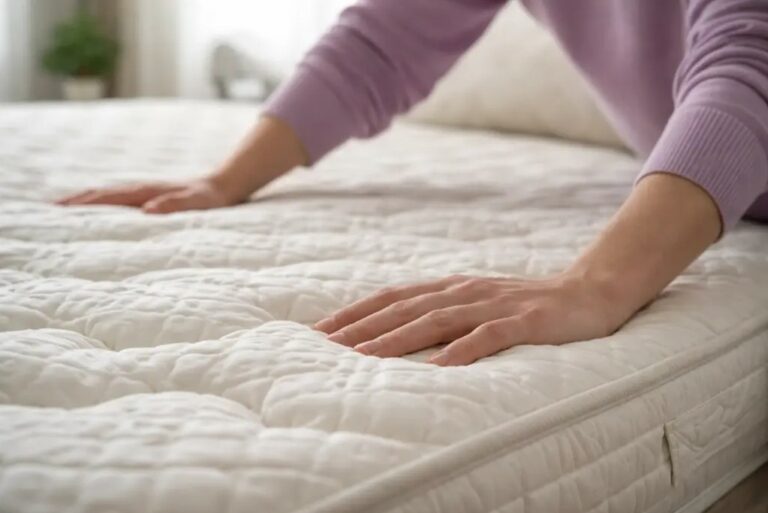
Clear dips, body-shaped indentations, or uneven surfaces mean the internal support materials have broken down. Even a 1–2 inch sag is enough to throw off spinal alignment and disrupt your sleep. Run your hand flat across the surface in good lighting — if it feels wavy, sunken, or lumpy in places, it’s time to take the problem seriously.
3. You Sleep Better Away From Home
If hotel beds, guest rooms, or even your own couch suddenly feel more comfortable than your mattress, that’s a strong signal. We adapt to gradual decline without fully noticing it — until we sleep somewhere else and feel the difference immediately. If you’re dreading coming home to your own bed, trust that instinct.
4. Persistent Fatigue Despite 7–8 Hours in Bed
You’re in bed long enough, but you still wake up groggy and unrested. An aging mattress causes micro-arousals — tiny neurological disruptions that pull you out of deep, restorative sleep stages without fully waking you. You won’t remember them in the morning, but you’ll feel the cumulative effect all day: low energy, poor concentration, and the sense that sleep just isn’t refreshing anymore.
5. Worsening Allergies, Asthma, or Persistent Odors
Old mattresses accumulate dust mites, mold, dead skin cells, and other allergens deep within the materials. If your allergy or asthma symptoms are worse at home than elsewhere, or if you notice a musty smell that won’t go away, hygiene has become a genuine concern. This matters even more if you already deal with allergies or breathing issues.
6. Your Mattress Is 7+ Years Old — Even If It Looks Fine
Internal degradation happens long before visible damage appears on the surface. Foam softens, coils lose tension, and latex slowly loses its resilience — all without any obvious sign from the outside. At the 7-year mark, start evaluating honestly, even if nothing looks wrong. Noisy or creaking springs are an additional clue that the internal structure is weakening.
7. Visible Physical Damage
Stains, tears, holes, or exposed springs aren’t just unsightly — they compromise structural support, harbor bacteria, and indicate the mattress has reached the end of its useful life. At this point, replacement isn’t optional.
How Long Does Each Mattress Type Typically Last?
Not all mattresses age at the same rate. Build quality, materials, and usage habits all play a role — but construction type sets the baseline:
| Mattress Type | Typical Lifespan | Key Notes |
|---|---|---|
| Innerspring / Coil | 5–8 years | Coils lose tension and can become noisy. Most affordable option but the shortest lifespan of any type. |
| Memory Foam | 6–10 years | Prone to softening and body impressions over time. Heat retention often worsens as the foam ages. |
| Hybrid (Foam + Coils) | 7–10+ years | Best overall balance of comfort, support, and durability for most sleepers. Coil layer reduces foam compression. |
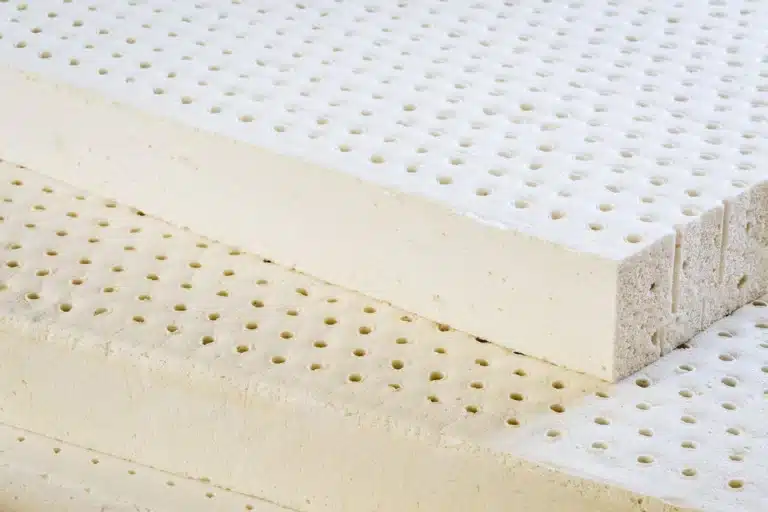
| Latex (Natural) | 10–15+ years | The most durable option available. Highly resistant to sagging and body impressions. Natural latex can last 20+ years with proper care. |
Your body weight, the number of sleepers, the presence of pets on the bed, and whether you rotate the mattress regularly all influence how quickly it ages relative to these benchmarks.
Why Replacing Your Mattress Matters for Your Health
A worn mattress doesn’t just feel uncomfortable — it actively works against your physical health and daily functioning. The effects compound over time:
- Chronic back, neck, and joint pain from inadequate support and poor spinal alignment
- Fragmented sleep cycles with significantly less time in deep, restorative stages
- Worsened allergy and asthma symptoms from accumulated dust mites and allergens
- Reduced daytime energy, focus, mood, and productivity
- Higher long-term health risks associated with chronic sleep deprivation
Many people notice better sleep, less pain, and more energy surprisingly quickly after replacing an old mattress.
What to Look for When Buying a New Mattress
Match Firmness to Your Sleep Position
Your sleep position determines what your body needs from a mattress more than any other factor:
- Side sleepers: Medium to medium-soft firmness. Your hips and shoulders need to sink in enough to keep the spine level, without the mattress collapsing under you.
- Back and stomach sleepers: Medium-firm to firm. Softer mattresses allow the midsection to sink too deeply, misaligning the lumbar spine. Stomach sleepers in particular need firm support.
- Combination sleepers: A versatile medium-firm hybrid usually works best, offering reasonable performance across multiple positions throughout the night.
Learn more about how mattress firmness really works.
Insist on a Generous Trial Period
How a mattress feels on day one, in a showroom or on delivery, is not how it will feel after three weeks of sleeping on it. Your body needs time to adjust, and the mattress needs time to break in. Look for brands offering at least 100 nights; many reputable companies offer 120–365 nights. A long trial period is also a sign that the company stands behind the product.
Don’t Ignore the Foundation
An old or sagging box spring, platform base, or bed frame can undermine an excellent new mattress from night one. Uneven support accelerates wear, and many mattress warranties are voided if the mattress is used on a non-approved or worn-out base. When investing in a new mattress, inspect your foundation thoroughly — and replace it at the same time if there’s any doubt. It’s a small added cost that protects a much larger investment.
Prioritize Materials and Warranty Over Sticker Price
A higher price doesn’t automatically mean better sleep, but quality materials and construction do matter for long-term durability and support. High-density foams, tempered coil systems, and natural latex all outperform cheaper alternatives over time. Look for warranties of 10–15 years as a minimum; this signals the manufacturer’s confidence in the build. A mid-to-premium mattress that lasts 12 years almost always costs less per year than a budget option that needs replacing in five.
Best Times to Buy a Mattress
Mattress retailers run their deepest promotions on a consistent annual schedule. If your current mattress is approaching the end of its life, timing your purchase around these windows can save you hundreds of dollars without compromising on quality:
- Memorial Day (late May) — Traditionally, the single biggest mattress sales event of the year. Discounts of 30–50% are common across most major brands.
- Labor Day (early September) — The second-largest sales window. Strong deals on both in-store and online brands.
- Black Friday / Cyber Monday — Particularly strong for direct-to-consumer online brands. Worth comparing against Memorial Day prices.
- Presidents’ Day (mid-February) — Solid early-year promotions ahead of spring new model launches.
- Spring (March–May) — Retailers clear older inventory as new models arrive. Good opportunity to find previous-year models at a discount.
Frequently Asked Questions
How do I know if my mattress is causing my back pain?
The clearest indicator is timing. If your back pain is worst first thing in the morning and improves significantly within an hour of getting up and moving around, your mattress is very likely a contributing factor. A failing mattress forces your lower back muscles to compensate overnight — resulting in stiffness and soreness by morning. (See our top mattresses comparison guide for back pain)
Can a mattress topper save my old mattress?
A topper can improve surface comfort and temporarily mask early softness, but it cannot restore lost core support. If your mattress is sagging, has degraded coils, or has simply passed its useful lifespan, a topper will not fix the underlying problem. Use toppers to fine-tune comfort on a mattress that is structurally sound — not as a substitute for replacement when the mattress is genuinely past its prime.
Is an expensive mattress worth it?
Often yes — but the right question is cost per year, not sticker price. A $1,500 mattress lasting 12 years costs around $125 per year. A $700 mattress lasting 5 years costs $140 per year, and you also face the disruption and cost of replacing it sooner. Focus on warranty length, materials quality, and trial period rather than price alone. Many excellent options exist in the $900–$1,500 range.
What’s the best mattress for side sleepers?
Side sleepers generally do best on a medium to medium-soft mattress — specifically one that allows the hips and shoulders to sink in enough to keep the spine neutral without the mattress bottoming out under body weight. Memory foam and hybrid mattresses tend to perform best for side sleepers. Firm mattresses often create pressure point pain at the hips and shoulders for anyone spending most of the night on their side. (Read about the best mattresses for side sleepers.)
Should I replace my box spring when I get a new mattress?
In most cases, yes — especially if the box spring or base is 8 or more years old. A worn foundation creates uneven support that accelerates wear on your new mattress and can void the warranty. If you’re spending money on a quality new mattress, pairing it with a matching or new base protects both the investment and the warranty coverage. At minimum, test the existing base thoroughly before reusing it.
What’s the difference between a mattress warranty and its actual lifespan?
A warranty covers manufacturing defects — things like premature sagging beyond a defined threshold (typically 1–1.5 inches), broken coils, or cover failures. It does not cover normal wear over time, comfort changes, or personal preference shifts. A mattress can still be within warranty while no longer providing the support your body needs. Warranty length is a useful proxy for build quality, but replace your mattress based on how it performs for you — not simply whether the warranty has expired. (Learn more about how sleep trial and warranty work.)
How do I dispose of an old mattress responsibly?
Most municipalities offer bulky item collection for mattresses. Check your local waste management service for scheduling. Dedicated mattress recycling programs exist in many states and countries, often diverting up to 80% of materials (steel, foam, fabric) from landfill. Many new mattress retailers also offer free haul-away of your old mattress on delivery day, which is the most convenient option if available.
Does mattress quality actually affect sleep quality?
Yes, and the evidence is consistent. Studies show that switching to a newer, medium-firm, supportive mattress measurably reduces back and shoulder pain, improves sleep continuity, and increases time in deep restorative sleep stages. Many people report noticing a difference within the first few nights. Given that sleep quality has downstream effects on immune function, mood, cognitive performance, weight management, and cardiovascular health, a good mattress is one of the highest-return health investments most people can make.
The Bottom Line
If your mattress is showing multiple signs of wear or is simply past the 7-year mark, don’t delay the decision. You don’t need to wait for springs poking through or visible collapse. The gradual, quiet decline is exactly what makes mattress wear so easy to overlook and so costly to your health when ignored.
A good mattress is one of the most important pieces of your sleep setup, and when it starts failing, your body usually knows before you do.
If you’re sleeping on aches, fatigue, or a mattress you’ve stopped trusting, this is the year to fix it.
Ready to find the right fit? Explore Sleep Examiner’s latest mattress reviews and top picks for every sleep style and budget.